
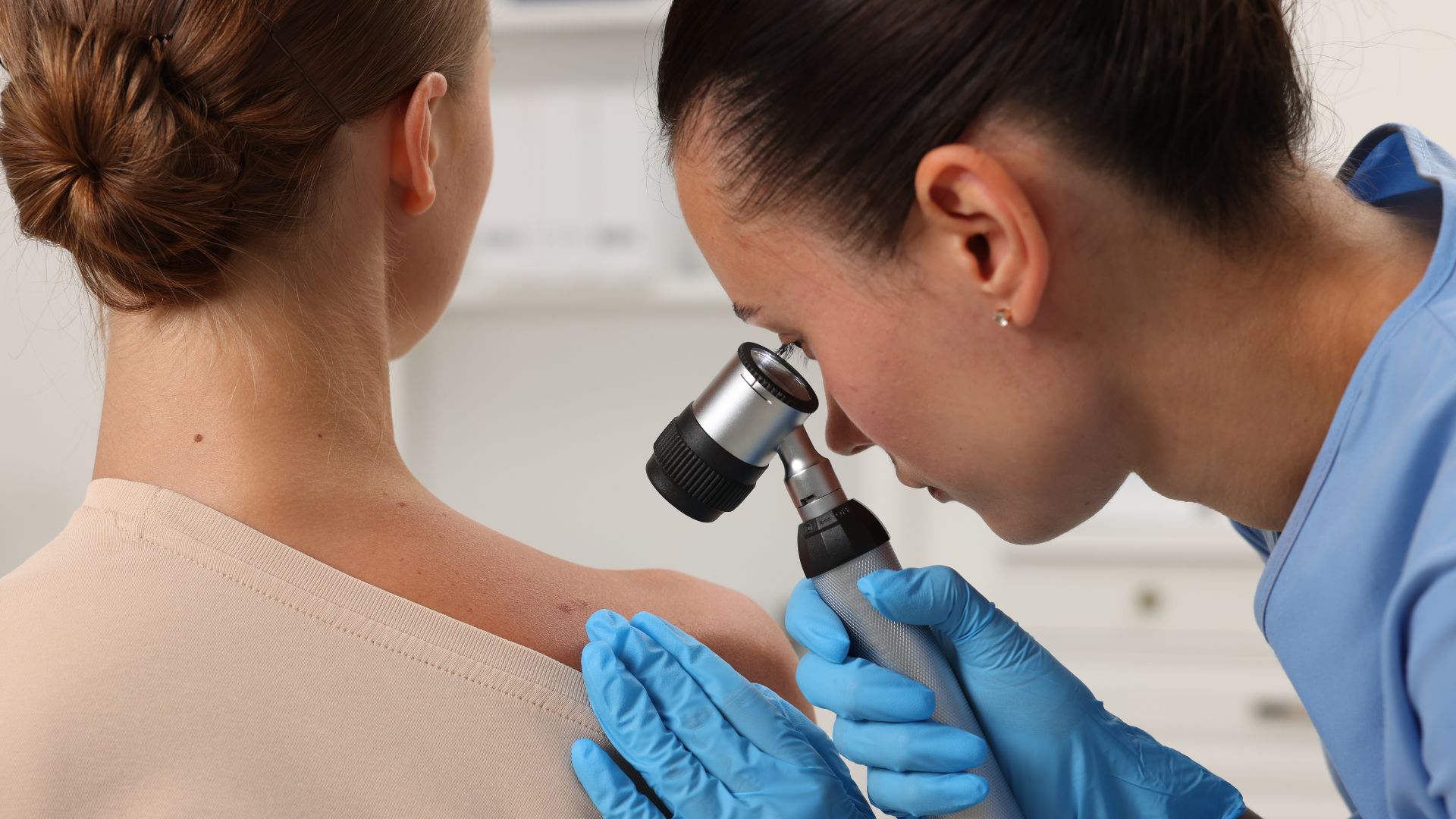
What Are the Signs of Skin Cancer? A Guide to Early Detection
Skin cancer is among the most frequently diagnosed cancers globally. It is also one of the more detectable forms of cancer when identified in its early stages, which generally improves treatment outcomes.
Recognising the warning signs does not require medical training, but it does require familiarity with specific visual indicators. These include changes in existing moles, the appearance of new growths, and skin lesions that fail to heal over time.
What Does Skin Cancer Actually Look Like?
Skin cancer can look different depending on its type. Basal cell carcinoma may appear as a pearly or translucent bump, sometimes with visible blood vessels. Squamous cell carcinoma can appear as a rough, scaly patch, an open sore, or a firm red nodule. Melanoma may show asymmetry, irregular borders, variation in colour, a diameter often greater than 6 millimetres, or changes over time. These features are summarised in the ABCDE criteria.
For a detailed guide to what are the signs of skin cancer, look for a new or changing mark, a sore that does not heal, or a lesion that appears different from your other moles. Other possible signs include a lesion that bleeds or crusts repeatedly, or a flat, skin-coloured or scar-like area that persists. These signs do not confirm cancer, but a new, changing or persistent lesion should be assessed by a GP, dermatologist or other qualified healthcare professional.
The ABCDE Rule for Spotting Melanoma Early
The ABCDE criteria are a useful guide for identifying potential signs of melanoma:
- Asymmetry: one half of a mole does not match the other in shape or size.
- Border: the edge is uneven, notched, blurred or poorly defined.
- Colour: there are multiple or changing shades, including brown, black, tan, red, white or blue.
- Diameter: melanomas are often larger than 6 mm, but they can be smaller.
- Evolving: the mole changes in size, shape, colour, sensation or appearance, or begins to bleed.
The ABCDE guide does not identify every melanoma. A new lesion, or one that looks noticeably different from a person’s other moles, sometimes known as the “ugly duckling” sign, should also be checked. Using these signs during regular skin checks can support earlier assessment of abnormal lesions.
Early Signs of Basal Cell and Squamous Cell Carcinoma
Basal cell carcinoma, or BCC, may appear as a pearly or translucent bump, a pink or skin-coloured patch, or a sore that does not heal or repeatedly returns. It often develops on sun-exposed skin, particularly the face, ears, scalp, neck and upper body.
Squamous cell carcinoma, or SCC, may appear as a rough or scaly patch, a firm red nodule, or a persistent crusted sore. SCC can occur on sun-exposed areas, including the face, ears, scalp, lower lip, hands, arms and legs, but it can develop elsewhere on the body.
Both conditions are linked to cumulative ultraviolet exposure, among other risk factors. Any new growth, changing lesion or non-healing sore should be assessed by a qualified healthcare professional.
Recognising BCC Visual Signs
Basal cell carcinoma can present in several ways. Possible signs include pearly or translucent bumps, pink or skin-coloured patches, a persistent sore, or a lesion that bleeds or crusts and then appears to heal before returning.
BCC is usually slow growing, but it can cause local tissue damage if left untreated. Early assessment and treatment are important.
SCC Symptoms and Locations
Squamous cell carcinoma may present as a rough, scaly patch, a firm red nodule, a crusted lesion or a sore that does not heal. It commonly develops on areas with substantial ultraviolet exposure, including the face, ears, scalp, neck, lower lip, forearms, hands and lower legs.
Symptoms such as itching, tenderness or pain may occur, but are not present in every case. A persistent or changing lesion should be assessed regardless of whether it causes discomfort.
When to Seek Evaluation
Seek medical advice for a sore that does not heal, a new or changing growth, a persistent rough or scaly patch, or a pearly, translucent or bleeding lesion. Changes in a mole, including irregular borders, uneven colour or asymmetry, also need assessment.
People with a history of skin cancer, significant ultraviolet exposure, a large number of moles, a family history of melanoma or a weakened immune system may have a higher risk. They should discuss an appropriate skin-check routine with a clinician.
Can Itchy or Painful Skin Be a Sign of Skin Cancer?
Itching, tenderness or pain can occasionally occur with skin cancer, but these symptoms are non-specific and have many more common, non-cancerous causes. Squamous cell carcinoma may be tender or painful, while a changing mole or lesion can sometimes itch, bleed or become sensitive.
The important factor is whether these sensations occur with a new, changing or persistent visible lesion. If they do, arrange a clinical assessment rather than relying on self-diagnosis.
Where on Your Body Skin Cancer Most Commonly Appears
Skin cancer often develops on areas that receive regular sun exposure, including the face, scalp, ears, lips, neck, arms and legs. Basal cell carcinoma and squamous cell carcinoma commonly occur on these sites.
However, melanoma and other skin cancers can develop anywhere, including the back, palms, soles, genitals and beneath the nails. Acral lentiginous melanoma, for example, can occur on the palms, soles and nail units in people of any skin tone.
A whole-body skin check is therefore more useful than checking only areas that are regularly exposed to sunlight.
How to Do a Skin Cancer Self-Exam at Home
Regular self-examination can help you notice changes in your skin. Cancer Research UK’s guide to checking your skin explains which changes should be assessed by a doctor. Check in a well-lit room and use a full-length mirror and a hand mirror for difficult-to-see areas.
Use the ABCDE guide for moles, and look for any new growth, changing lesion, persistent scaly patch, shiny bump or sore that does not heal. Taking photographs may help you monitor changes over time, but should not delay medical advice for a concerning lesion.
Who Is Most at Risk for Skin Cancer?
Anyone can develop skin cancer, but some factors increase risk. These include fair skin that burns easily, lighter hair or eye colour, a large number of moles, a personal or family history of skin cancer, and previous severe sunburn.
Ultraviolet exposure from sunlight or tanning beds is an important risk factor. People with weakened immune systems, including organ transplant recipients and those taking immune-suppressing medication, are also at higher risk.
Darker skin provides some natural protection from ultraviolet radiation, but it does not eliminate the risk of skin cancer. New, changing or persistent lesions should be checked regardless of skin tone.
How to Prevent Skin Cancer Before It Starts
Skin cancer prevention includes reducing exposure to ultraviolet radiation. Seek shade when the sun is strong, wear protective clothing and a wide-brimmed hat, and use sunglasses that provide UV protection.
Use a broad-spectrum sunscreen with an SPF of at least 30 on exposed skin. Apply enough product and reapply at least every two hours, as well as after swimming, sweating or towelling. Sunscreen should complement, rather than replace, shade and protective clothing.
Avoid tanning beds, as artificial ultraviolet radiation increases skin cancer risk. Regular skin checks can also help identify changes early.
Conclusion
Early detection of skin cancer can improve treatment options and outcomes. The ABCDE rule, the ugly duckling sign, persistent sores and unusual skin changes can all help identify lesions that need medical assessment.
Regular self-examinations and consistent sun protection are practical ways to reduce risk and notice changes sooner. If a skin lesion is new, changing, persistent or unusual, seek advice from a GP, dermatologist or other qualified healthcare professional.